Conference "Smart City Impact": Smart cities as a roadmap for Bosnia and Herzegovina
- Bit Alliance
- Apr 23, 2024
- 4 min read

23.04.2024.

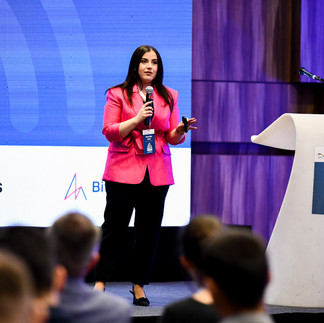
“Smart City Impact,” the closing conference of the project “Smart Cities – Towards Digital Transformation of Cities in Bosnia and Herzegovina,” was held yesterday in Sarajevo. This major event officially marked the end of the project, summarizing its results, exchanging experiences, hearing expert insights, and outlining key lessons for the future steps of Bosnian cities and municipalities on the path toward digital transformation.
Hannah Heil, Program Manager at GIZ in Bosnia and Herzegovina, emphasized in her opening remarks that GIZ has been highly active in the country for nearly 30 years and that this project is the result of 3.5 years of continuous work by all partners.
“For a long time now, digitalization and innovation have played an important role, not only in cooperation with Bosnia and Herzegovina but around the world. Representatives from Tešanj, Zvornik, Pale, Zenica, and Prijedor have shown us that they are ready for a strategic approach and the allocation of more resources with the goal of digitalization, in order to make their cities smarter,” Heil said.
Damir Maglajlić, Executive Director of Bit Alliance, highlighted that this is a special event for all project participants, adding that none of this would have been possible without the synergy of local governments, companies LANACO and DVC Solutions, and the support of GIZ.
“I hope this conference will forge strong bonds on the path of joint progress in the field of digitalization in Bosnia and Herzegovina. With the knowledge gained through this project, we aim to contribute to the continued development of this story. Bit Alliance, as an association of IT companies in BiH, strives to connect domestic companies and their digital solutions with local government units, and improve processes related to industry development overall,” said Maglajlić.
Kristina Erak, Project Manager at Bit Alliance, presented the project results, highlighting that the initiative began in 2021 in cooperation with five local government units, with a particular focus on strengthening strategic planning capacities.
“As part of the project, digital readiness analyses were created for five local government units, which served as the basis for the development and adoption of Digital Transformation Roadmaps. Two demo projects were also implemented – Citizen Patrol, an application for reporting municipal issues, and GoParking, an application for more efficient management of city parking services. We are proud of the project’s results and pleased to say that we demonstrated how change is possible at the local level in the context of digital transformation,” stated Erak.
Bit Alliance, as the umbrella association of IT companies in the country, also identified that while academia, the private sector, and international organizations are working on smart initiatives, the synergy between these actors is not sufficiently developed. Therefore, the Smart City Forum was launched as a consultative body serving as a permanent meeting platform for these stakeholders.
“The development of digital readiness assessments and the Digital Transformation Roadmap, adopted by all five local governments, is of strategic significance because it outlines all the steps needed for a local community to successfully advance on its path toward digital transformation,” Erak emphasized.
At the conference, Bosnia and Herzegovina’s Minister of Communications and Transport, Edin Forto, spoke about where Bosnia and Herzegovina stands on the regional digital map.
“At the state level, we have a government and some state agencies, but there are no citizen-facing services at the national level. There has long been talk about what needs to be done, but at this moment, BiH does not have developed services for citizens. We want pilot projects, and the state ministry will support their implementation. I am advocating for the creation of e-services. We need to work pilot by pilot to make these services available to citizens,” said Forto.
Digitalization expert Adnan Kulovac then spoke about the importance of strategic planning on both the micro and macro levels, emphasizing the significance of digital readiness and infrastructure. This was followed by a panel discussion with representatives of the participating local governments, who spoke about their digitalization processes and how to take the first step.
Representatives of Zvornik, Pale, Tešanj, Prijedor, and Zenica noted that digitalization is essential for improving citizens’ quality of life and that innovation and new technologies enable broad citizen participation, enhance government transparency, simplify processes, and optimize costs. Although citizens often struggle to accept change, the key message was to begin the digitalization process as early as possible.
The conference concluded with a session titled “The Role of the Local Private Sector in the Digitalization Process,” during which Dragan Ninić, Development Director at LANACO, and Bojan Vuković, Director of DVC Solutions, spoke about the GoParking and Citizen Patrol applications.
The project “Smart Cities – Towards Digital Transformation of Cities in BiH” was implemented from 2021 to 2024 within the develoPPP.de program. It was carried out by the Deutsche Gesellschaft für Internationale Zusammenarbeit (GIZ) GmbH on behalf of the Federal Ministry for Economic Cooperation and Development of the Federal Republic of Germany (BMZ), in cooperation with companies LANACO and DVC Solutions, and the Bit Alliance – the association of IT companies in BiH.